
Helpsheet 2f: Defining freelancer status (film & TV)
Last Updated on 31 August 2026

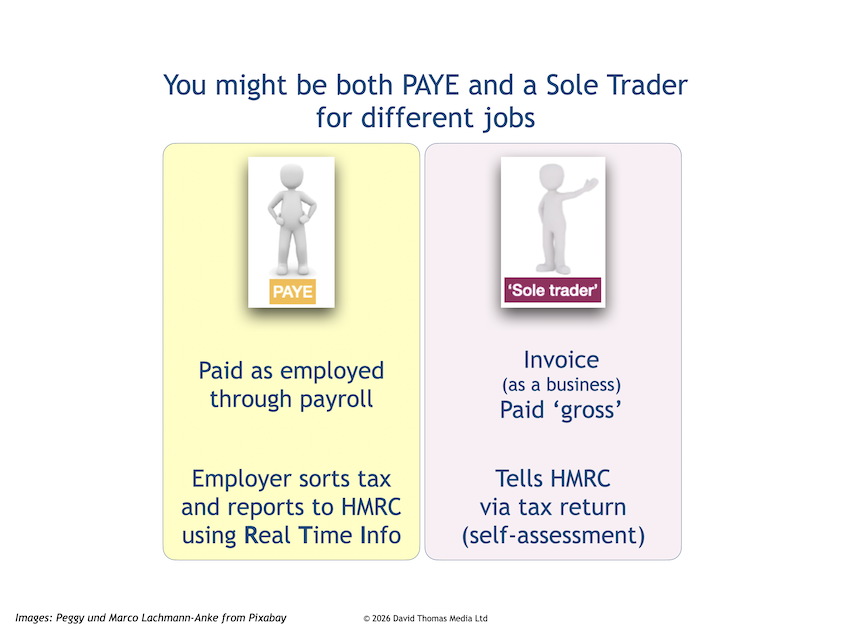
There are only two ways of being paid and taxed in the UK when you work for someone else. You are either paid as ‘employed’ or you are paid as ‘self-employed’.
The word ‘freelance’ doesn’t help here, as production freelancers can be paid as employed and self-employed, depending on the nature of the job or how long you do it for.
For any job you do it’s important to know whether you’re going to be paid as employed or self- employed, as the tax and national insurance arrangements will be different.
‘Freelance’ doesn’t really have any technical meaning. It simply means someone whose income is ad hoc or regularly comes from a variety of clients or employers. It can refer to both employment (e.g. fixed-term contracts, PAYE) and self-employment.
Employed

For freelancers this is often known colloquially as PAYE freelancing, as employees are paid through a system called Pay As You Earn (PAYE).
Production job roles that are more junior are always paid in this way, so people usually start being paid as employed at the beginning of their career.
Typically you will be put on the payroll of the organisation paying you.
The employer sorts out your income tax (using a tax code from the tax people at HMRC) and national insurance (NI) payments, and tells HMRC whenever they pay you.
The employer has to give you a payslip which says how much tax and NI they’ve taken off. Keep these safe!
To keep track of your payslips as you go along, use our handy template >
You may have student loan repayments deducted if you have a projected annual income above a certain amount. (see: www.studentloanrepayment.co.uk). Apply for a refund if you think you’ve been overpaying on your student loan. (see my blog on this >)
You might also be auto-enrolled in a workplace pension if you are with the organisation for more than a few months. This is optional. You can opt out if you want to, but take advice before you do.
The 7-day rule
Confusingly, if you are working for less than 7 days you may well find that the employer takes off NI but not income tax. This is a special arrangement which is supposed to stop production people being over-taxed for lots of very short jobs.
You should put 20% of any un-taxed pay aside, as you may have a tax bill for the un-taxed earnings at the end of the tax year.
Self-employed

A sole trader is a type of one-person business – very different from a company, but still a business in the eyes of HMRC. Sole trader is the usual technical term for someone who is registered as self-employed.
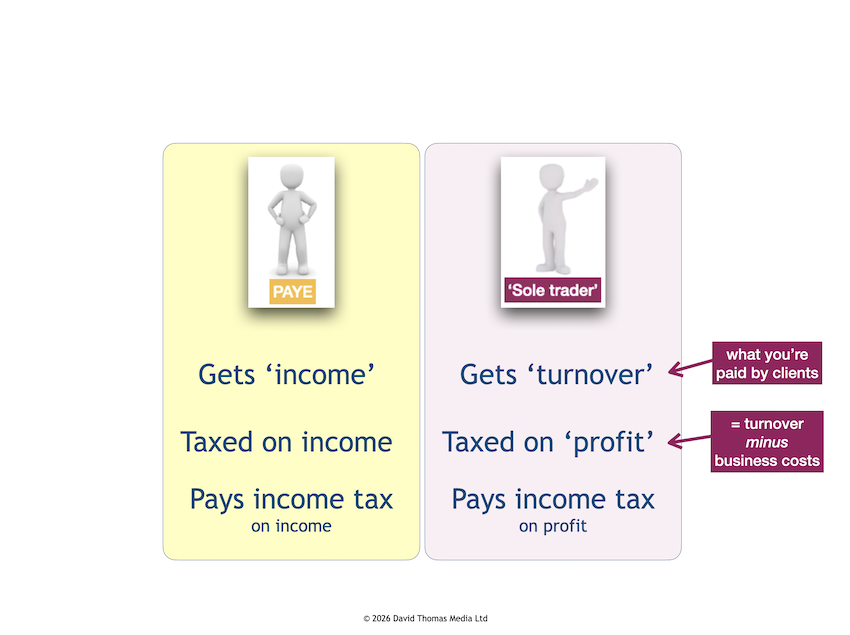
Self-employed people have ways of reducing their tax bill by offsetting business-related expenses against their business income. For this reason HMRC is keen to ensure people don’t pretend to be self-employed!
In TV and film production the more ‘expert’ or ‘specialist’ roles are allowed to be self-employed because this feel more like a business.
This tends to mean people who are producer level, heads of department, or have specialised roles where they are not being someone’s assistant. The list includes roles where you might have to provide your own equipment to get the job done.
Self-employment usually means registering as a sole trader. (See helpsheet 2 for more on limited companies). With any type of business there are rules about keeping records, and you have to sort out all the tax and national insurance. Self-employed people always do a self-assessment tax return at the end of each tax year.
Freelancers might have a mix of PAYE work and self-employed jobs through a tax year. If that’s you, it’s important to keep the records separate.
NB: HMRC allows you to earn up to £1000 as as sole trader in a tax year without having to register as a sole trader. You can just keep the money!
This is very useful for people who get most income PAYE and have just a small amount of sole trader work.
Once you earn £1001 or more in a tax year you must register as a sole trader, even if you know you won’t be paying any tax.
There is a list of job roles which HMRC agrees can be paid as self-employed. You can check out the latest ‘agreed list’ via this blog post:
https://davidthomasmedia.com/self-employed-roles-in-production-updated-list/
Find out more:
www.screenskills.com/education-training/freelance-toolkit/ – a really good freelance primer
www.youtube.com/user/HMRCgovuk – Yes, the tax office has a YouTube channel
www.gov.uk/working-for-yourself – Basic advice on how to start up as self-employed
Tax office helpline for status enquiries: 0300 123 2326 (option 1)
Gov.uk help with tax returns >
Check out our video explainer on how deductions are made for tax, NI, student loan repayments, etc.: