
Helpsheet 6: Student loans and freelancing
Last Updated on 29 June 2026
NB: This helpsheet mainly uses figures for Plan 2 loans in England and Wales. Figures change every tax year, and might be different for Scottish or Northern Irish residents, but the principle is the same.
For useful links, scroll down to the Find Out More box.
Student loan repayments are a bit of a pain when you’re a PAYE freelancer.

In England and Wales you’re supposed to start paying down your student loan when you reach an annual income of £29,385. If you live in Scotland the equivalent figure would be £33,795; in Northern Ireland it’s around £27,000. (All 2026 figures)
BUT, employers paying you through the payroll use the weekly income as a trigger to start paying a loan down. They don’t wait till you have a total of £29,385 income.
The current trigger for plan 2 loans in England and Wales is £565 a week or £2,448 a month.
For PAYE freelancers just starting their career this brings a manifest unfairness, as they might earn more than £565 for a few weeks, and then nothing for a few months. I’ve met people who earn less than £20,000 in a year and have had part of their student loan paid off.
This is definitely not how the student loan system was sold to the nation.
On top of that, gov.uk makes clear that if you have multiple PAYE jobs each under the repayment threshold, you can end up not paying off any of the loan, even if the total of all the PAYE income across the year would take you over the threshold.
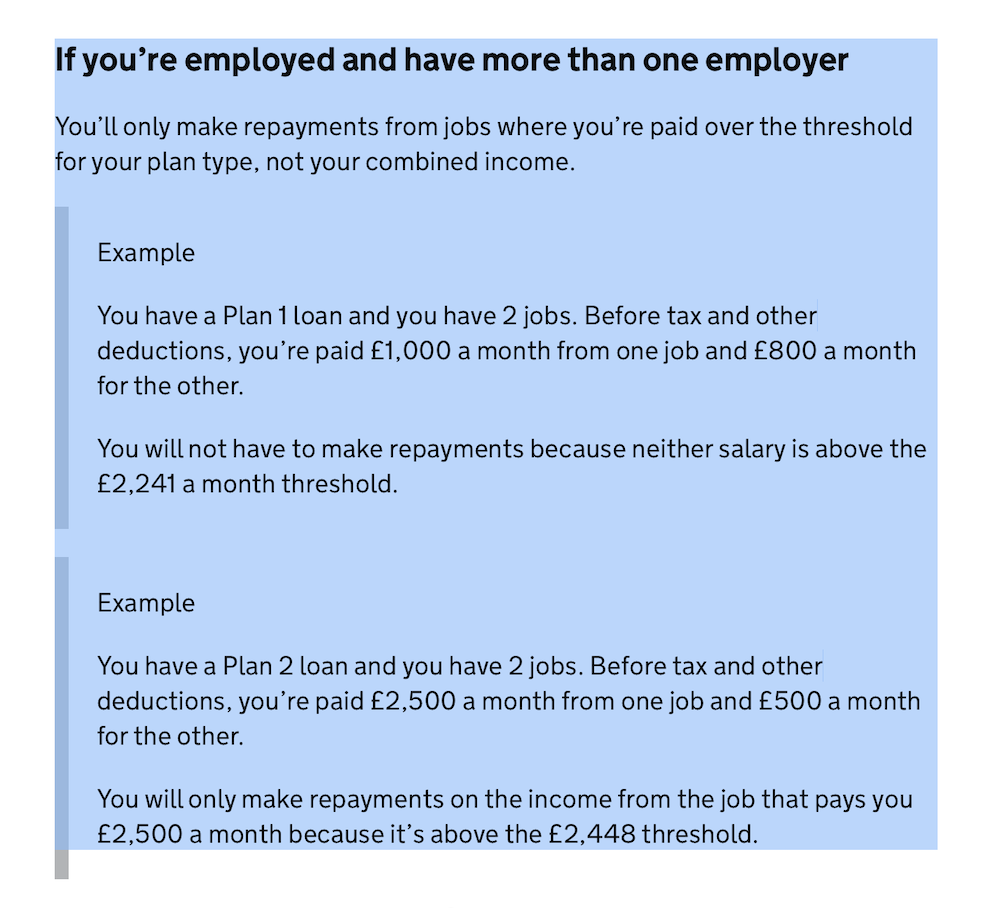
…unless you’re having to fill in a self-assessment tax return for some reason…
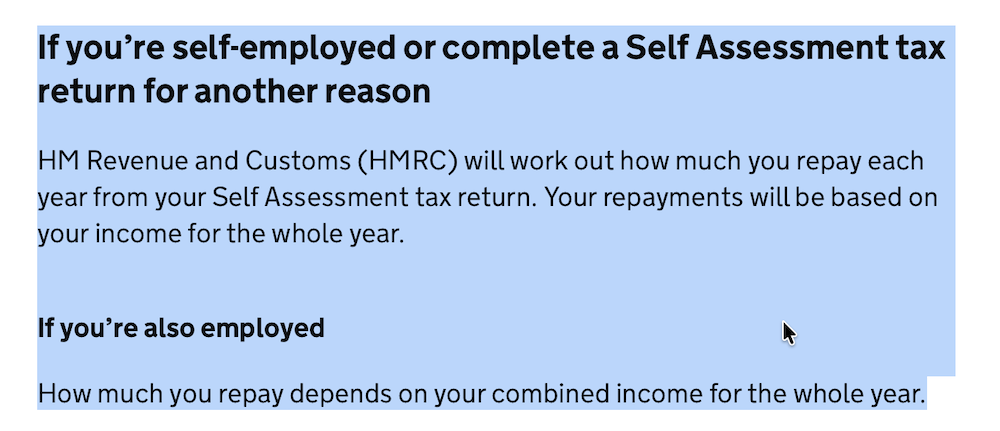
It’s all a bit of a mess.
Getting a refund
It is possible to get a refund if you’ve overpaid, though many PAYE freelancers are unaware of this, possibly because they’re not paying attention to their payslips.
This won’t be relevant to sole traders, as they declare total profit at the end of the year in a self-assessment tax return. However it might be very relevant if you have a mix of PAYE and sole trader income.
Gov.uk gives four reasons you might get a refund:
- you’ve paid more than the total amount you owe
- your annual income was below the threshold
- you started making repayments before you needed to
- you’ve repaid more than you need to because your employer had you on the wrong repayment plan
You’ll also find details of how to contact the Student Loan Company to get a refund:
https://www.gov.uk/repaying-your-student-loan/getting-a-refund
How user friendly is the system?
I’m very grateful to a former participant on one of my Finance for Freelancers courses who let me know how the refund system worked for them. In short “painless but lengthy”.
This freelancer has a mixture of PAYE income and sole trader income. Here’s what they wrote:
“
I contacted Student Loans in May [2021] by phone to raise the query that I might be due a repayment for the 2020/21 Tax Year. I received a letter in the post from Student Loans stating that they don’t receive information for self employed persons from HMRC until January the following year and advised I get back in touch in February 2022.

I just got off the phone with them today [24 Feb 2022]. Apparently they don’t actually receive the info from HMRC until the end of March, but the advisor on the phone filled in a form to send to HMRC to get the updated information for the 2020/21 Tax Year. This process should be completed within 20 days.
While on the phone, he notified me I was also due a refund for the tax years 2016/17 and 2015/16. This repayment was processed and should be in my account in 4 to 6 days.
How to keep on top of things
The way to spot if you’ve overpaid on a student loan is to keep an eye on the annual threshold, and then check if you went through the weekly/monthly threshold for any PAYE work you’ve done.
My top tip is to download my free PAYE payslip record sheet and fill in the deductions whenever you get a payslip. That way you will have a running record of what people have taken off your payments for the whole year.
This will be useful if you have to contact the Student Loan Company or HMRC.
Also, as a matter of course:
- keep your payslips
- keep any P60 you might receive
I’d be interested if you have any experiences of getting refunds for overpayments yourself. Comments are always welcome below.
Good luck!
Find out more:
https://www.gov.uk/repaying-your-student-loan
https://www.gov.uk/repaying-your-student-loan/getting-a-refund
Martin Lewis’s site Money Saving Expert has some very comprehensive advice:
https://www.moneysavingexpert.com/students/student-loan-overpayment-refund/
…as well as this article about proposed changes to the student loan system >
Download our PAYE payslip record sheet:
Check out our video explainer on how deductions are made for tax, NI, student loan repayments, etc.:
Please note:
Although every effort has been made to provide accurate tips and information, David Thomas Media Ltd accepts no responsibility for any errors, omissions or out-of-date facts. Trainees are advised to seek up-to-date professional advice on all financial and tax matters before making decisions relating to these subjects. Nothing in our notes, courses, webinars, downloads or social media should be considered as financial advice.
We believe our tips are useful - but they are only tips!
NB: David Thomas Media Ltd is not responsible for the content of other sites nor any financial advice provided by them.