I spent a fun day at the CIPD annual exhibition last week, helping out the lovely people at Unlimited Potential, a coaching and training company I’m associated with.
One of the reasons the exhibition was so successful for Unlimited Potential was the consistency of the brand message – from the images and wording on the stand to the way we described what we do when we spoke to people, to the layout of the brochures.
We even wore the same purple t-shirts, which made a huge impact and wasn’t nearly as embarrassing as it sounds.
The best stand of the whole event was a group who provide team-building exercises in the form of film production. A wonderfully simple idea that was carried through with a stand that was basically a lighting rig. They all wore the same t-shirts too. It was a great example of good branding delivering a simple message.
Another training organisation took the simple approach to an extreme. Their key message was ‘we won’t waste your money’. They had bought not one but three ‘plots’ around the exhibition hall and instead of dressing them in the time-honoured (and expensive) fashion, they left them completely empty except for a small pile of brochures. Occasionally someone would be attending the stands. Often they were deserted.
I’ve no doubt this seemed like a totally genius idea when they came up with it. The trouble was there was no way of knowing that this was supposed to be clever marketing. It just looked like they hadn’t turned up.
Posted on 28 April 2007
A friend of mine is always reminding people of the power of the three-word tag as part of business branding. In fact he’s positively evangelical about it. He says we’re all pre-wired to remember things in threes. Any business that doesn’t use a three-word slogan is – in his view – missing a trick.
A quick look up and down the high street – or at least the out-of-town retail park – shows he may have a point. Test your friends with these:
- every little helps
- have a break
- Beanz Meanz Heinz (a giveaway that one)
- never knowingly undersold
They don’t even have to be in English – Vorsprung durch Technik anyone?
Sainsburys has the rebellious ‘try something new today’, and therefore (according to my friend) deserves everything it has coming to it. Though it redeems itself slightly by having a premium line called ‘taste the difference’.
I read in today’s Media Guardian that ads are having to get cleverer.
It’s something to do with the audiences getting more sophisticated, completely contradicting the argument for dumbing down.
I wonder where this leaves the power of the three-word tag or slogan. My suspicion is that it will never go away. Threesomes are so powerful they have been used for centuries, so I can’t see them disappearing just because Asda decides to spot patting its bum.
Winston Churchill used the power of three all the time in his speeches. Even when he didn’t that’s the way we remember him. Blood, sweat and tears was actually ‘blood, toil, tears and sweat’.
The earliest example I can think of is Julius Ceasar’s ‘Veni. Vidi. Vici.’ (I came. I saw. I conquered.) After all, he could just as easily have said ‘I came. I conquered’. Just ‘I conquered’ would have conveyed the meaning, especially to the poor sods he’d just slaughtered.
And he was a man who understood the importance of branding.
Posted on 16 April 2007
Happy new year!
As another April 6th flies past more people are slowly waking up to the fact that Gordon Brown pulled a fast one on small companies in last month’s budget. Big business gets a 2p cut in corporation tax. Small business gets a 3p rise in corporation tax. How’s that meant to work?
I’ve been wondering why so many people missed it. David Cameron has been taunting Tony Blair about ‘not seeming to realise that there were two types of corporation tax’. I get the distinct impression that he didn’t realise either until one of his less well-off lackeys pointed it out some time in the week between the Budget and the next PMQs.
I’ll admit it’s a bit of a pain updating all our training materials following each Budget, but one of the pleasurable side effects for a news junkie like me is comparing the coverage in all the papers the day after.
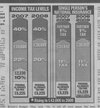
Almost all talked about the ‘abolition’ of the starting rate of income tax – a phrase that the Treasury uses. Now in my version of English abolishing a tax is a thing to be celebrated. But in Treasury-speak abolishing the starting rate actually means turning it into the standard rate. This means doubling it – from 10% to 20%.
None of the broadsheets pointed this out in ways that you or I would understand. Which was the only paper to nail it? Step forward the Sun. And to prove it here’s the clever – and remarkably simple – graphic they used.
Posted on 10 April 2007
Coming soon…musings on running a small business, the media and why trainers use so much Blutack.
Posted on 23 March 2007


